
Overview
As the core space for industrial production, factory buildings directly affect process stability, product quality rates, equipment lifespan, and worker comfort. With industry moving towards precision, intelligence, and eco-friendliness, central air conditioning has upgraded from just a 'temperature and humidity tool' to essential infrastructure that ensures smooth production and boosts overall efficiency. In essence, factories need central AC as a customized environmental solution to fit complex industrial scenarios. It has to focus on four key areas: process adaptation, environmental control, energy efficiency, and safety, meeting the different needs of various industries and working conditions.
Requirements
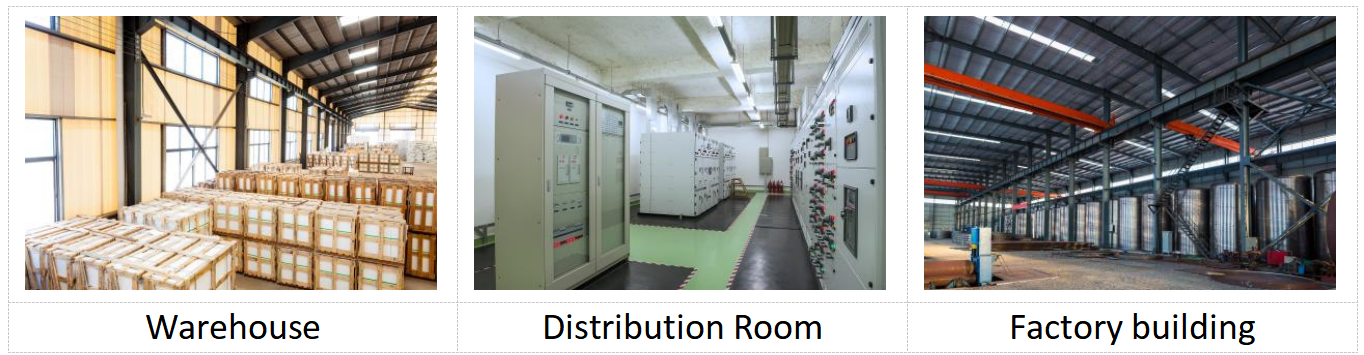
The objects of ventilation services for factory buildings, power distribution rooms, and warehouses include: processes, machinery and equipment, products, occupational environment, and atmospheric environment. Therefore, the design of industrial ventilation is generally difficult and influenced by many complex factors.
The role of industrial building ventilation design is:
1) Removal of pollutants: Capture pollutants generated during production processes and discharge them outdoors through the ventilation system or send them to pollutant treatment equipment. Air containing pollutants is treated to meet standards before release.
2) Supply: Deliver fresh air or air with specific temperature and humidity to work areas or process equipment, creating a healthy working environment or meeting the process production environment requirements.
3) Replacement: Replenish air that is expelled by mechanical or natural ventilation, maintaining indoor pressure balance or the pressure difference required by the process.
MR Solution Description
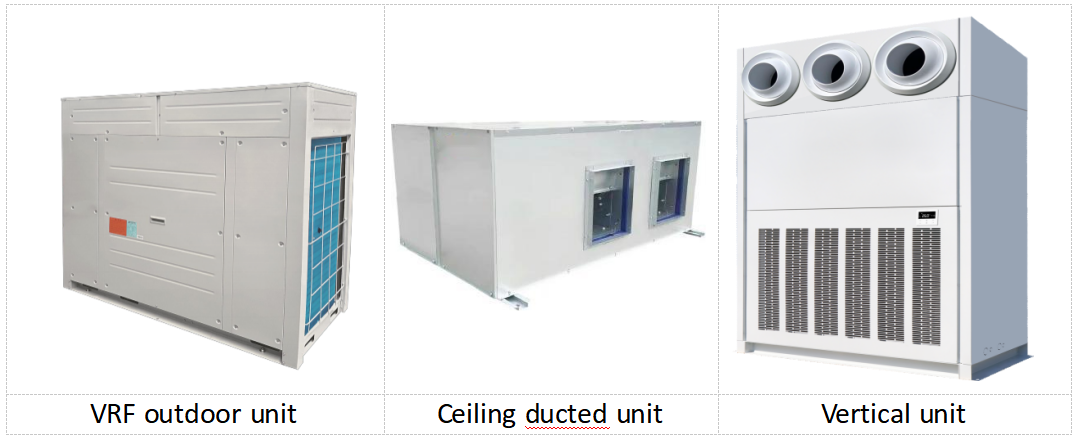
Choosing industrial VRF systems paired with jet terminal units and vertical units for factories offers an efficient temperature control solution for high-ceiling spaces and complex working conditions. Equipped with full DC inverter technology, it supports independent time-based and zone-based control, saving 28%-35% energy compared to traditional air conditioning, drastically lowering operational costs. The jet units can deliver air over 30 meters, while the vertical units take up only 65% of the space of traditional units. Together, they eliminate the temperature layering problem of hot air on top and cold air below in tall factories. Plus, the ductless design doesn’t interfere with equipment layout or crane operations. The entire system is corrosion-resistant and can handle dusty, oily industrial environments, running steadily in a wide temperature range from -10°C to 55°C. When combined with an IoT cloud platform, it allows remote monitoring and cloud maintenance. The modular design also lets you expand in stages as needed, cutting construction time by 40% compared to conventional central AC, fitting both new and old factory renovations. Overall, it helps reduce production costs and increase efficiency, providing solid support for industrial operations.
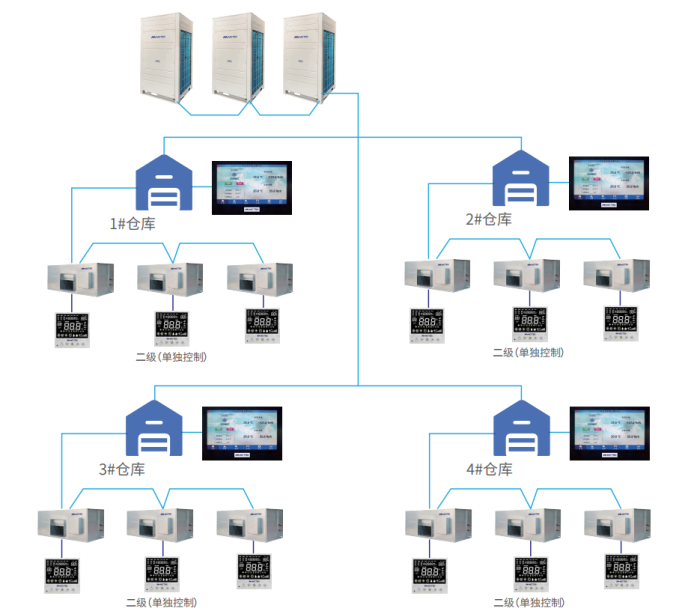
Industrial zoning control:
Level 1 Control (Centralized Control): The central controller manages a system area as a whole, meeting the customer's need for centralized control and the way it operates.
Level 2 Control (Individual Control): The line controller manages a single indoor unit, allowing control over cooling, heating, ventilation, dehumidification, and other requirements inside the room.
Unit used